Exceptional sushi and sake, hands-on craftsmanship, and one of Japan’s most celebrated onsen inns.
TL;DR: Niigata itinerary in three days — sampling some of Japan’s best sushi and sake, exploring the metalworking heartland of Tsubame-Sanjo, and unwinding at a top-ranked onsen ryokan. A slower, richer alternative to Japan’s big cities, and a dream for food lovers who want to get closer to the source.
Table of Contents
Why include Niigata in your Japan itinerary?
Most people planning a Japan trip spend weeks agonising over Tokyo neighbourhoods, Kyoto temple routes, and Osaka street food. Niigata, two hours away by shinkansen and ranked 37th out of 47 prefectures for foreign visitors, almost never comes up.
That’s partly because it doesn’t look like the Japan most people are picturing. No ancient temples, no neon skylines, no obvious postcard moment. What it has instead is rice — the best in Japan — and a chain of consequences that flows from that fact in directions you wouldn’t first expect: sake brewed with mountain snowmelt, seafood from one of the most productive coastlines in the country, and a craftsmanship culture built, quite literally, on the same rivers that gave the region its agricultural identity. The waterways that irrigated the rice fields once powered the hammers in Tsubame-Sanjo’s forges. The precision required to grow exceptional rice is the same precision that defines how its artisans work.
I went for the food. I came back thinking about all of it — the sake flight at a vending machine that made me understand, for the first time, why rice variety actually matters; a ryokan that has been voted Japan’s best by Japanese travelers year after year; and an afternoon watching copper smiths work in near silence, each hammer strike gentle and exact, knowing that a single error in the shaping means the entire piece is discarded.
None of it feels like it belongs on a highlights reel. All of it stays with you.

Rice: The foundation of Japanese cuisine
Niigata’s identity starts with rice. The prefecture’s geography gives it everything needed to grow exceptional rice: mineral-rich snowmelt from deep mountains, nutrient-dense soil, and abundant fresh water. Rice is the backbone of Japanese cuisine, and Niigata’s varieties—notably Koshihikari—are considered among the best in the country. Top sushi chefs across Japan actively seek out Niigata-grown rice.
Great rice naturally leads to great sake. With pure water and ideal brewing conditions, Niigata has earned a reputation as Japan’s sake capital, known for clean, refined, food-friendly styles that pair beautifully with seafood.
Seafood: Where ocean currents meet
Then there’s the seafood. Niigata sits on the Sea of Japan at the meeting point of two major ocean currents: the warm Tsushima Current and the colder Liman Current. This convergence creates a nutrient-rich marine environment, supporting a diverse, year-round fishing industry.
Nearby Sado Island is particularly famous for its fishing grounds, supplying Niigata’s markets and restaurants with incredibly fresh catch. In winter—when I visited—specialties like kan-buri (winter yellowtail) and nodoguro (blackthroat seaperch) dominate menus. Both are prized for their high fat content, similar to chutoro or otoro tuna, with rich, buttery textures that melt on your tongue.
Put it all together and it’s no surprise that Niigata’s sushi scene is outstanding, from humble conveyor-belt spots to serious omakase counters. The quality rivals Tokyo, but at a fraction of the cost—and with far fewer tourists.
Craftsmanship: Where dedication becomes a way of life
The Tsubame-Sanjo region sits about 30 minutes south of Niigata city, and it has been the heart of Japanese metalworking since the Edo period. What makes it extraordinary isn’t any single factory or technique, it’s the culture of dedication that runs through all of them. Artisans here don’t diversify. They choose one thing — a knife, a copper teapot, a pair of scissors — and spend their working lives perfecting it. The results are objects that are exported worldwide and sought out by professionals who know what they’re looking at.
If you’ve bought a high-end Japanese kitchen knife, there’s a good chance it came from here. Tsubame-Sanjo is where you can visit the factories that made it, watch the artisans who forged it, and if you want, make something yourself. It earns its place in your Niigata itinerary, not as a detour, but as the third pillar of what makes the prefecture worth the journey.
Day 1: Arrival in Niigata
A first taste of what Niigata does better than anywhere else
Getting There from Tokyo
- Tokyo → Niigata by shinkansen (2hours)
Aim to arrive before lunch so you can maximize your first day. I rented a car from Niigata Station, which gave me flexibility to reach Kahou Onsen later in the day and explore hidden spots. That said, exploring Niigata city itself is perfectly manageable on foot, and public transport is readily available if you prefer not to drive.
What to Do in Niigata
Lunch at Bandai Market
Start with lunch at Bandai Market, often compared to Tokyo’s Tsukiji but fresher, calmer, and far less touristy. It’s both a tourist attraction and a genuine local hub. Wander through stalls selling seafood, rice products, fresh produce, and regional specialties. From April to October, there’s an outdoor barbecue area. Winter visitors should look out for seasonal delicacies like kan-buri (winter yellowtail), nodoguro (blackthroat seaperch), and crab.
I ate at Benkei Pier Bandai, a famous local chain for kaiten-zushi (conveyor belt sushi). The prices are shockingly reasonable, and the selection is exceptional—much of it freshly caught from Sado Island. The quality easily rivals mid-range sushi spots in Tokyo, but at a fraction of the cost. It’s the kind of place where locals eat regularly, which tells you everything you need to know.

Ponshukan Sake Museum (if you are not driving)
Located inside Niigata Station, Ponshukan is less a museum than a tasting lab with vending machines dispense nearly 100 types of sake, and you work through them at your own pace.
The value isn’t in finding the most premium sake. It’s in understanding the range: from light, dry styles designed to complement your meal, to sweeter, more aromatic bottles that stand well on their own. Tasting them side by side, you start to understand how rice variety, water, and brewing method actually change what’s in the glass. This is something you can read about, but only really grasp by tasting. If you end up at an izakaya on your next few nights asking knowledgeable questions about the sake list, this is why.
To even further your sake experience, add a brewery visit. Imayotsukasa, located 30-minutes on foot from the station, was founded in the 18th century. The still-functioning brewery now offers tours that run about 30 minutes and walk you through traditional brewing methods alongside modern techniques. This is a good way to understand how the process works before you start tasting it everywhere. Tastings included in the tour. Check tour times in advance at imayotsukasa.co.jp/en.
Afternoon Options: Two Different Experiences
This is where your itinerary splits depending on what you prioritize.
Option A: Head to Kahou Onsen (My Recommendation)
If you want to experience one of Japan’s top-ranked onsen ryokans, head to Tsukioka Onsen in the afternoon. It’s about 45 minutes from Niigata by car or bus.
Shiratama no Yu Kahou (https://www.kahou.com/en/) has been repeatedly voted one of Japan’s best onsen hotels by Japanese travelers, and after staying there, I understand why. It’s not a small, intimate ryokan—this is a large-scale hotel with many rooms and a bustling atmosphere, especially on weekends when it fills with domestic guests. But it’s exceptionally well-run, which is why it maintains its reputation year after year.

What makes Kahou special
The onsen: Kahou sources its water from a private hot spring. The water is slightly milky and feels incredible on your skin—soft, almost silky. The public bath is large and impressively equipped:
- Spacious indoor bath with a relaxation area
- Large sauna and cold plunge pool
- Circular open-air bath
- Rock bath, reclining bath, sitting bath
- Outdoor cooling area with infinity chairs
The scale means you’re never fighting for space, even when busy.
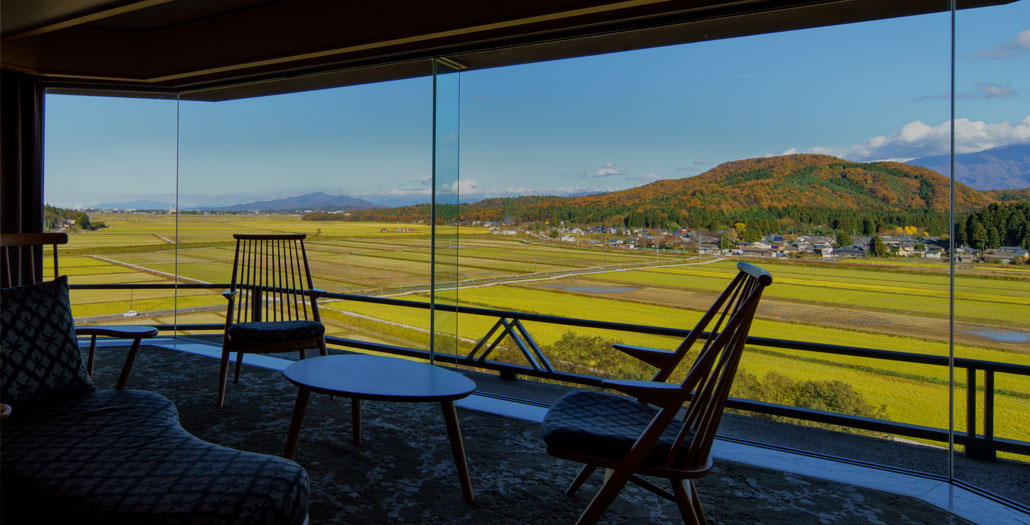
The view: The lobby lounge offers sweeping views of Niigata’s rice fields, and certain room types (depending on floor and placement) have similar views. It’s calming to look out over the flat, orderly landscape—especially in winter when the fields are dormant and dusted with snow, or in late spring and summer when they’re vibrant green.

The food: Kahou offers several dinner options, and the experience varies significantly depending on which you choose.
The buffet is the most accessible and, based on what Japanese guests consistently say about it, not an afterthought — it’s well-regarded in its own right, with regional dishes, seafood, and grilled options representing what’s in season. Above that sits a properly served dinner, and above that, kaiseki — a curated multi-course meal built around whatever’s at its best that month.
When I visited in winter, kaiseki meant nodoguro and kan-buri appearing across several courses: fish at peak fat content, prepared simply enough to let the quality speak for itself. The menu shifts entirely with the season, so what you eat in winter is a genuinely different meal from what you’d eat in spring or autumn. That’s the point of kaiseki, and Kahou does it properly.
If food matters on this trip, the kaiseki upgrade is worth it. If you’re budgeting carefully or not especially food-focused, the buffet holds up.
The facilities: Premium amenities throughout with high-end hair dryers, quality hair care products, massage chairs in the changing rooms. It’s the kind of place that pays attention to details.
Kahou represents excellent value for what you get. It’s not an intimate, artisanal experience, but it’s polished, reliable, and genuinely relaxing. For first-time visitors to Niigata, I’d absolutely recommend staying here over a business hotel in the city. It adds a dimension to the trip that you won’t get otherwise.
A note on pricing: Like a typical ryokan, Kahou operates on a room-and-two-meals package system, and rates vary significantly by room type, meal plan, day of the week, and season. The range is wide from roughly ¥10,000 per person per night at the lower end (simpler room, buffet dinner) up to ¥60,000+ per person per night for premium rooms with kaiseki dinners. Most visitors land somewhere in the middle. Weekends and Japanese public holidays carry a noticeable premium. If your dates are flexible, a midweek stay is both quieter and better value.
Option B: Stay in Niigata City and Explore More
If onsen isn’t your priority, or you want to spend more time exploring Niigata’s food and culture, stay at a business hotel near Niigata Station. This gives you the evening to explore the city further. Juraku stay (link) is close to the station, no-frills and very affordable, or ANA Crowne Plaza (link) for more comfort and bigger rooms.
Dinner at Kyodai Sushi
If there’s one meal to plan this trip around, it’s this one. Niigata’s sushi scene is exceptional — the fish is extraordinary, the rice is the best in Japan, and the sake pairings go further than anywhere else in the country. Kyodai Sushi is where all of that comes together.
Eight counter seats. The chef is not the chatty type, even with Japanese customers. He is entirely focused on what he’s doing, and that focus is visible in every plate. The service around him is of the highest standard: drinks are refilled before you notice they’re low, and the staff are genuinely skilled at sake recommendations, and this matters in Niigata, where the local options alone could fill an evening.
In winter, the fish is extraordinary. The nodoguro and kan-buri are at their richest, the fat content visibly different from what you’d find on the same fish elsewhere. This is omakase at its finest — not theatre, not performance, just absolute command of the ingredients in front of him.
The bill came to around ¥25,000 per person. Yes the price is steep, but comparable counter in Tokyo with the same quality, same skill would be closer to ¥50,000. You’re not compromising on the experience. You’re just not paying the Tokyo premium.

Additional activities in Niigata:
Saito Villa: Once the estate of a wealthy merchant family, now a museum surrounded by meticulously maintained gardens. It offers a quiet glimpse into Niigata’s mercantile past and traditional architecture.
Niigata Aquarium: One of the largest aquariums on this side of Japan’s coastline. A solid option for families or travelers looking for a relaxed afternoon activity.
Where to Stay (First Night)
For the onsen experience: Shiratama no Yu Kahou (Tsukioka Onsen)
For city convenience: Business hotel near Niigata Station
Day 2: Day trip to Tsubame-Sanjo
Inside Japan’s metalworking soul
Japan is globally recognized for its craftsmanship culture—artisans dedicating their lives to perfecting a single trade. This is precisely why the “Made in Japan” label carries such weight, especially when it comes to knives, tools, and kitchenware.
The twin cities of Tsubame-Sanjo is synonymous with this craftsmanship. Since the Edo period, this region has been the heart of Japanese blacksmithing and metalworking, producing everything from professional kitchen knives to copper teapots that are prized worldwide. If you’ve ever bought a high-end Japanese knife, there’s a good chance it came from here.
Getting There from Niigata
- Niigata → Tsubame-Sanjo by shinkansen (10mins)
- Optional: Rent a car from Tsubame-Sanjo Station for easier access to different factories, which are spread across the city. I had my rental from the previous day, which made navigation much simpler.
Getting There from Tsukioka Onsen (Kahou)
- Tsukioka Onsen → Niigata by bus (50mins)
- Niigata → Tsubame-Sanjo by shinkansen (10mins)
- Optional: Rent a car from Tsubame-Sanjo Station for easier access to different factories, which are spread across the city. I had my rental from the previous day, which made navigation much simpler.
What to Do in Tsubame-Sanjo
In the age of efficiency and automation, factories have become synonymous with soulless machinery. But in Tsubame-Sanjo, technology takes a back seat. This is about centuries-old techniques and handmade products. You can visit open factories, watch artisans at work, participate in hands-on workshops, and shop directly from makers—often at prices far below retail elsewhere.

Key Factories and Workshops
Tsubame-Sanjo’s workshops and factories are spread across the city, roughly divided between an eastern cluster and a western one. The most natural route is to start east and work your way west, which also happens to align with the two workshops, one before lunch and one after.
Morning: Eastern side — Marunao, Suwada and making a letter opener
Start at Marunao, a woodworking specialist best known for their eight-sided chopsticks, each one shaped with a precision that makes you handle them differently than you would the disposable kind. Prices are steep, but you’re holding something that will last decades.
Close by, Suwada makes cutting tools — scissors, garden shears, and the nail clippers they’re internationally famous for. Watching them explain the manufacturing process clarifies, quickly, why people pay what they pay.
After Suwada, the Sanjo Blacksmith Dojo before lunch. I made a letter opener from a nail — heated, hammered into shape, ground, polished. The blacksmith guides you through every step, and the whole process takes around 30–40 minutes. The result is a functional object you made yourself, which feels meaningfully different from anything you could buy.
Afternoon: Western side — Tsubame Industrial Museum, Tojiro, Gyokusendo
After lunch, the Tsubame Industrial Museum offers a hands-on copper cup workshop, where you can learn to create the hammered pattern. The technique is called tsuiki, and it requires a steadier hand than it looks. Around 30–40 minutes, and you leave with something that looks like it came from a craft shop but didn’t.
From there, head to Tojiro for knives. The factory is open, and you can watch the production process step by step from raw steel to finished blade before browsing the shop. Their range runs from everyday kitchen knives at around ¥6,000 to hand-forged professional blades well above ¥30,000. The staff explain the differences between steel types and blade profiles. This is where I bought my kitchen knife.
Saving the best for the last. End the day visiting Gyokusendo, masters of copperware, such as teapots, cups, and vases. What sets them apart is the technique: each piece is hammered from a single sheet of copper. A teapot, including the body and the spout, formed from one unbroken sheet. There are no joins, no seams, and also no room to correct a mistake. If the shape drifts at any point, the entire piece is discarded.
Gyokusendo is the only stop on this day with a guided tour, and it’s worth staying for. The guide walks you through the full production process — how different objects are formed from a flat sheet, how the copper is coloured, and what the training years look like for someone learning this craft. Tours run in multiple languages and leave on an ad hoc basis, so ask at reception when you arrive about the next departure.
Watching the artisans work while someone explains what you’re actually seeing makes the difference: everyone moving in near silence, each hammer strike gentle and quick, the margin for error is low. After the tour, in their showroom, I stood in front of a copper vase — around 60cm tall and priced at just over ¥1 million — and understood, for the first time, exactly why.

Shopping for Functional Souvenirs
Beyond the workshops, spend time browsing the shops selling knives, cutlery, metalware, and expertly crafted goods. Tsubame-Sanjo is where you can pick up functional souvenirs that will truly last a lifetime: knives that hold their edge for decades, copper cups that develop a beautiful patina, chopsticks carved with precision.
This isn’t tourist kitsch. These are tools and objects designed to be used, passed down, and appreciated. If you care about craftsmanship and want to bring something meaningful home, this is the place.
Where to Stay (Second Night)
Tsubame-Sanjo remains a rather industrial city, and accommodation options are frankly quite limited. After spending your day here, return to Niigata and stay at a business hotel near Niigata Station for convenience.
Back in Niigata for the evening, head to an izakaya near the station. Goro Bandaiten and Echigo-ichie Juro are both within easy reach — seasonal seafood dishes, sashimi platters, grilled crab in winter, and sake lists long enough to revisit everything you tasted at Ponshukan.
Day 3: Return to Tokyo
A short morning, then the train home.
Most people won’t need a full day here unless you are re-visiting what you missed on Day 1.
Before you leave though, check out the souvenir shops at the train station. Everything here is actually from where you’ve been — regional sake, packaged Koshihikari rice, local sweets. Pick up a bag of Niigata rice crackers for the journey back. The prefecture is famous for its rice, and the crackers are the most honest souvenir you’ll find: simple, local, and genuinely enjoyable.
Then the shinkansen back to Tokyo. Two hours, and you’re back in a different Japan entirely.
Return to Tokyo
Niigata → Tokyo by Shinkansen (2 hours)
Practical Notes
When to Visit
I visited in winter, which is ideal for seafood lovers. Winter specialties like kan-buri (winter yellowtail), nodoguro (blackthroat seaperch), and various crab dishes are at their peak. The cold-water fish develop higher fat content, resulting in richer, more flavorful sushi and sashimi.
That said, this Niigata itinerary is excellent year-round:
- Spring/Summer: The rice fields around Kahou are lush and green, offering beautiful views. Bandai Market has outdoor barbecue areas (April–October).
- Autumn: Harvest season—fresh rice, mushrooms, and produce dominate menus.
- Winter: Premium seafood, onsen season, fewer tourists.
Renting a Car
I rented a car and found it worthwhile for flexibility. Parking was readily available even in Niigata city, and it made reaching Kahou Onsen and navigating Tsubame-Sanjo a bit easier.
That said, the itinerary is entirely doable via public transport:
- Kahou offers scheduled shuttle buses from Niigata Station
- Tsubame-Sanjo is accessible by shinkansen
- Niigata city itself is walkable
Choose based on your comfort level and desire for flexibility.
Budget Considerations
This Niigata itinerary offers excellent value across the board, but costs vary depending on choices:
Accommodation:
- Business hotel in Niigata: ¥8,000–12,000/night
- Kahou (basic package): ¥10,000/person/night, moderate luxury, excellent value for quality
- Kahou (upgraded package): ¥60,000+/person/night, higher-end, private bath, kaiseki dinner, worth it for more privacy and food lovers
Dining:
- Kaiten-zushi (e.g. Benkei): ¥2,000–4,000 per person
- Omakase (e.g. Kyodai): ¥20,000–30,000 per person
- Izakaya dinner: ¥4,000–8,000 per person depending on how much you drink
Tsubame-Sanjo:
- Factory visits: Free
- Workshops: ¥1,000–4,000 per activity
- Knives/souvenirs: ¥5,000–50,000+ depending on what you buy
Final Thoughts
The thing about Niigata is that its qualities are all interconnected in a way that’s unusual for a single prefecture. The rice grows here because of the snowmelt and the soil. The sake is exceptional because of the rice and the water. The sushi is extraordinary because of the sake rice and the cold-current fish arriving daily from Sado Island. The knives in Tsubame-Sanjo were forged here because the rivers once powered the hammers. It’s a place where everything traces back to something else, and paying attention to those connections makes the whole trip more interesting.
Two hours from Tokyo. Almost no foreign tourists. An omakase that costs half what it would in the capital. One of Japan’s best onsen hotels. And a workshop where you make something with your hands and bring it home.
Niigata doesn’t need to market itself harder. It just needs people who are paying attention.
Planning a visit to Japan beyond the obvious? Japan beyond the Golden Route maps out the best side trips from Tokyo if you’re building a longer trip.
Leave a Reply