Temples, castles and the beauty of the Japanese Alps
TL;DR: This Nagano and Matsumoto itinerary covers 5 days in central Japan with temples, an original National Treasure castle, an alpine valley, and a preserved Edo-period post town — all without rushing or backtracking. A grounded alternative to Japan’s more crowded routes.
Table of Contents
Why Nagano City and Matsumoto?
Central Japan doesn’t get the attention it deserves and that’s partly why I ended up here.
This Nagano and Matsumoto itinerary came together because I was looking for somewhere that combined genuine nature with cultural depth, without the logistics overhead of somewhere more remote. Both cities are well-connected and easy to base out of, but they sit at the edge of the Japanese Alps, which means serious mountain scenery is an hour away rather than a full day trip.
The specific draw, for a summer visit, is Kamikochi, a high-altitude valley that locals have been escaping to for generations. It stays cool when the large Japanese cities get oppressively hot, and the landscape is genuinely spectacular in a way that doesn’t require serious hiking credentials to appreciate.
The cultural side pulled me in equally. Matsumoto Castle is one of only five castles in Japan designated as a National Treasure — and crucially, it’s an original structure. Japan has hundreds of castles, but most of what you see are reconstructions. The National Treasure castles are the real thing: original timber, original keep, original defensive design. I’m working my way through all five, so Matsumoto was high on the list.
Then there’s Narai-juku, a preserved post town on the old Nakasendo, a 530km highway connecting Tokyo and Kyoto. I’ll probably never hike the full Nakasendo, but walking even a short stretch of it — through a town that still looks more or less as it did 300 years ago — scratches a particular itch. The small town is a slice of Edo-period life that isn’t performed for tourists; people still live and work there.
Nagano City and Matsumoto work well as a pair because they’re complementary rather than repetitive. Nagano City is the gateway. It is historically significant and well-connected, with the mountains starting to close in around it. Matsumoto is where the cultural depth kicks in. Together, they give you a version of central Japan that feels coherent and worth the effort.
This itinerary is designed for spring, summer, and autumn. Winter in Nagano deserves a different approach entirely — I cover that in a separate post focused on snow monkeys and seasonal landscapes.
Day 1: Arrival in Nagano City
Introduction to Central Japan
Nagano City is the capital of Nagano Prefecture and an ideal starting point for exploring Japan’s interior. While it lacks the instant visual drama of bigger cities, its strength lies in connectivity and historical depth. From here, rail lines and buses fan out into the mountains, making it a practical first stop for central Japan.
Getting to Nagano City
Tokyo → Nagano City by shinkansen (1 hour 30 minutes)
I recommend taking a day trip to Togakushi Shrine on your first day, then exploring Nagano city itself on the second morning before heading to Matsumoto. This structure maximizes your time and avoids the need to backtrack.
Day Trip: Togakushi Shrine
Togakushi Shrine lies deep in the forested mountains northwest of Nagano City. It’s reachable by express bus (50 minutes) or rental car (40 minutes), and feels a world apart from the city. I rented a car, which gave me flexibility, though the bus service is reliable and straightforward.
The shrine complex is spread across the mountain slopes and consists of lower, middle, and upper shrines (Hōkōsha, Chūsha, and Okusha), connected by roads and forest paths. Many visitors focus solely on the Okusha (upper shrine), which is the smallest, furthest, and most scenic. That’s what I did, and I’d recommend it if you’re short on time or prefer a single, concentrated experience over a full pilgrimage route.
The Path to Okusha: Walking Among Giants
The approach to Okusha is what makes Togakushi unforgettable. From the parking area and bus stop, a two-kilometer path unfolds beneath towering cryptomeria trees (Japanese cedar), some over 400 years old. The trees are massive—tall, straight, and ancient—creating a natural cathedral of wood and light. The effect is both humbling and meditative.
The path passes through the Zuishinmon Gate, a thatched-roof structure that marks the final approach, before climbing a set of stone steps to the shrine itself. The Okusha sits dramatically against the mountainside of Mount Togakushi, with peaks rising sharply behind it.
I spent about 2 hours at Togakushi, which included the walk to and from the Okusha shrine, time to sit quietly, and a bit of wandering. If you’re visiting all three shrines, expect to spend significantly longer—likely 4–6 hours depending on your pace and whether you use the shuttle bus (which operates hourly between shrines for ¥400 per ride).
If you have more time, I’d recommend exploring the full complex. The middle shrine (Chūsha) is known for its refined architecture, ancient trees (some over 800 years old), and a small waterfall nearby. The progression from lower to middle to upper shrines gives Togakushi its full atmosphere—a sense of ascent, both physical and spiritual.
Togakushi’s mythology
Togakushi Shrine (戸隠神社, Togakushi Jinja) is related to an important story in Japanese mythology in which the Sun Goddess hid herself in a cave in present day Takachiho on Kyushu after her brother had misbehaved, thereby bringing darkness to the world. In order to get the sunlight back, other deities tried to lure the Goddess out by performing spectacular dance performances. As the Goddess took a peek out, one of the deities grabbed the cave’s stone door and hurled it away to prevent her from hiding again. That door is said to have landed in Togakushi. The name Togakushi literally means “hiding door,”

Lunch Near Togakushi: Ju-Wari Soba
The Togakushi area is famous for soba, and the restaurant I’d point you to is Sobanomi (sobanomi.co.jp) — a small, serious place set back from the Okusha path, with a forest-facing interior that carries over the quiet of the walk. It does one thing and does it properly.
I ordered ju-wari soba, noodles made from 100% buckwheat flour, no wheat blended in. It’s the highest grade you can get, and the difference from standard soba is immediately apparent: chewier, more substantial, the buckwheat flavor more pronounced. Cold, dipped simply into soy-based broth. The combination of the setting, the walk, and the food made for one of those lunches that lands harder than its ingredients suggest.
Cold soba is my preference because it lets the quality of the noodle speak. In winter or early spring, hot soba would make more sense. Either way, don’t skip this.
Practical note: Sobanomi takes no reservations and closes when the soba runs out — which can happen early, particularly on weekends. Arrive before 12:30 if you can. The restaurant is closed on Thursdays and Fridays.
Where to Stay in Nagano City
Stay near Nagano Station for convenience. There’s a surprisingly wide range of business hotels, including some with small onsen facilities—comfortable, practical, and well-located. There’s also a shopping mall called Midori right above the station, making it easy to grab essentials or browse after your day trip.
My recommendations:
- Nagano Metropolitan Hotel (official website)— An old-school hotel connected directly to Nagano Station. It’s positioned as a slightly more premium option, though the interiors are a bit dated. Rooms are spacious by Japanese standards, and prices are budget-friendly.
- Tokyu REI Hotel (official website)— Located right in front of the station, this is a slightly newer property with more modern interiors. Rooms are similarly spacious, and prices are very similar to Metropolitan Hotel.
Both hotels offer excellent value and make it easy to catch the train to Matsumoto the next day.
Dinner on Night 1: The streets around Nagano Station have plenty of options, including izakayas, ramen shops, casual soba places, and this is an evening where wandering and picking based on what looks good works fine. There’s no single restaurant I’d point you to above the others here. Save your research energy for Matsumoto, where the food scene is more distinctive and worth planning around.
Day 2: From Nagano City to Matsumoto
Deeper into central Japan
Spend the morning exploring Nagano’s key sights before heading to Matsumoto. The train takes just 50 minutes, and you’ll have the afternoon and evening to explore Matsumoto’s castle and historic streets.
Visit Zenkoji Temple
Nagano is a temple town at heart, shaped around Zenkoji, one of Japan’s most important Buddhist temples. Founded in the 7th century, Zenkoji houses what is believed to be the first Buddhist statue ever brought into Japan—a claim that has drawn pilgrims for over 1,400 years.
Beyond its historical importance, Zenkoji feels unusually open and human for a major temple. It belongs to no single Buddhist sect and has long been a place of pilgrimage for ordinary people, not just religious elites. The atmosphere reflects this: communal, lived-in, and welcoming rather than austere.

The Underground Passage: Walking in Complete Darkness
I strongly recommend visiting the inner chamber (small entry fee required). Beneath the main hall lies an underground passage that invites visitors to walk in complete darkness in search of the symbolic “Key to Paradise.”
I thought I’d be fine with the darkness—I’m generally not nervous about that sort of thing. But it was actually pitch black. Not dim, not shadowy—completely, disoriently dark. I couldn’t see my hand in front of my face. That took me by surprise, and I definitely felt a flash of nervousness once I realized I couldn’t see anything at all.
After a moment, though, I adapted. I slowed down, took smaller steps, and focused on the wall to guide me. The passage isn’t long, but it took me close to 10 minutes, moving carefully and deliberately. There’s something quietly powerful about it—introspective, meditative, and oddly calming once you surrender to the experience.
Unfortunately, toward the end, a group of noisy teenagers entered behind me, screaming and laughing, which broke the atmosphere. But even with that disruption, it’s a memorable experience—one of those moments that stays with you long after the trip ends.
After the temple, the streets around Zenkoji reward a slow wander. Cafés, sweet shops, sake stores, small restaurants — none of it particularly curated, all of it functional in the way that temple towns tend to be. Two stops are worth singling out.
Yawataya Isogoro: The Original Shichimi Tōgarashi
One stop I highly recommend is Yawataya Isogoro, the original maker of shichimi tōgarashi, the classic Japanese seven-spice blend. Founded over 350 years ago in Nagano, the shop traces its recipe back to herbal medicine, when spices were valued as much for their restorative properties as for flavor.
Shichimi tōgarashi has since become a quiet staple of everyday Japanese cooking. Its balanced heat and fragrance make it remarkably versatile—commonly sprinkled over soups, soba, and udon, but just as good with grilled meat, fish, stir-fries, or donburi. I use it constantly at home. It instantly makes a dish feel more Japanese, adding warmth and complexity without overwhelming other flavors.
This is Yawataya Isogoro’s original store, and one of the highlights is the chance to create your own custom blend, adjusting the balance of spice, citrus, and aromatics to suit your taste. I made a custom blend with extra heat—I like things spicier—but I also bought the original version because it’s classic for a reason: perfectly balanced and universally usable.


The custom blend is a great option if you want less heat but more flavor, or if you want to emphasize certain aromatics. The tins are small and beautifully designed, making them ideal souvenirs. I bought several for friends, and they all loved them. It’s the kind of gift that’s both thoughtful and practical—something people will actually use rather than tuck away and forget.
BENIBENI, Shinshū-ringogashi-kōbō
If you have a sweet tooth, don’t miss BENIBENI, a small bakery specializing in beautifully made apple pastries using Shinshu apples. Shinshu apples are famous nationwide for their sweetness and premium quality, and this shop makes excellent use of them.
You won’t be able to miss it—the smell of freshly baked apple pies is intoxicating. There are chairs outside the shop where you can sit and enjoy your pastry while people-watching along the temple streets. It’s a simple pleasure, but one that perfectly captures the unhurried atmosphere of this part of Nagano.

Before heading to the station, grab lunch somewhere along the Zenkoji approach streets. There are several ramen shops and casual noodle spots in the area. Nothing that rises to destination level, but solid options for a quick meal before the train. I ate at a ramen shop near the main street and it did the job. This isn’t a food destination; Matsumoto is. Have a comfortable lunch and move on.
Head to Matsumoto
After enjoying your morning in Nagano, take the train to Matsumoto, which is only 50 minutes away via the Shinano limited express line. This makes for an easy transition between the two cities without feeling rushed.
Getting There:
Nagano → Matsumoto by Shinano limited express train (50 minutes)
Visit Matsumoto Castle
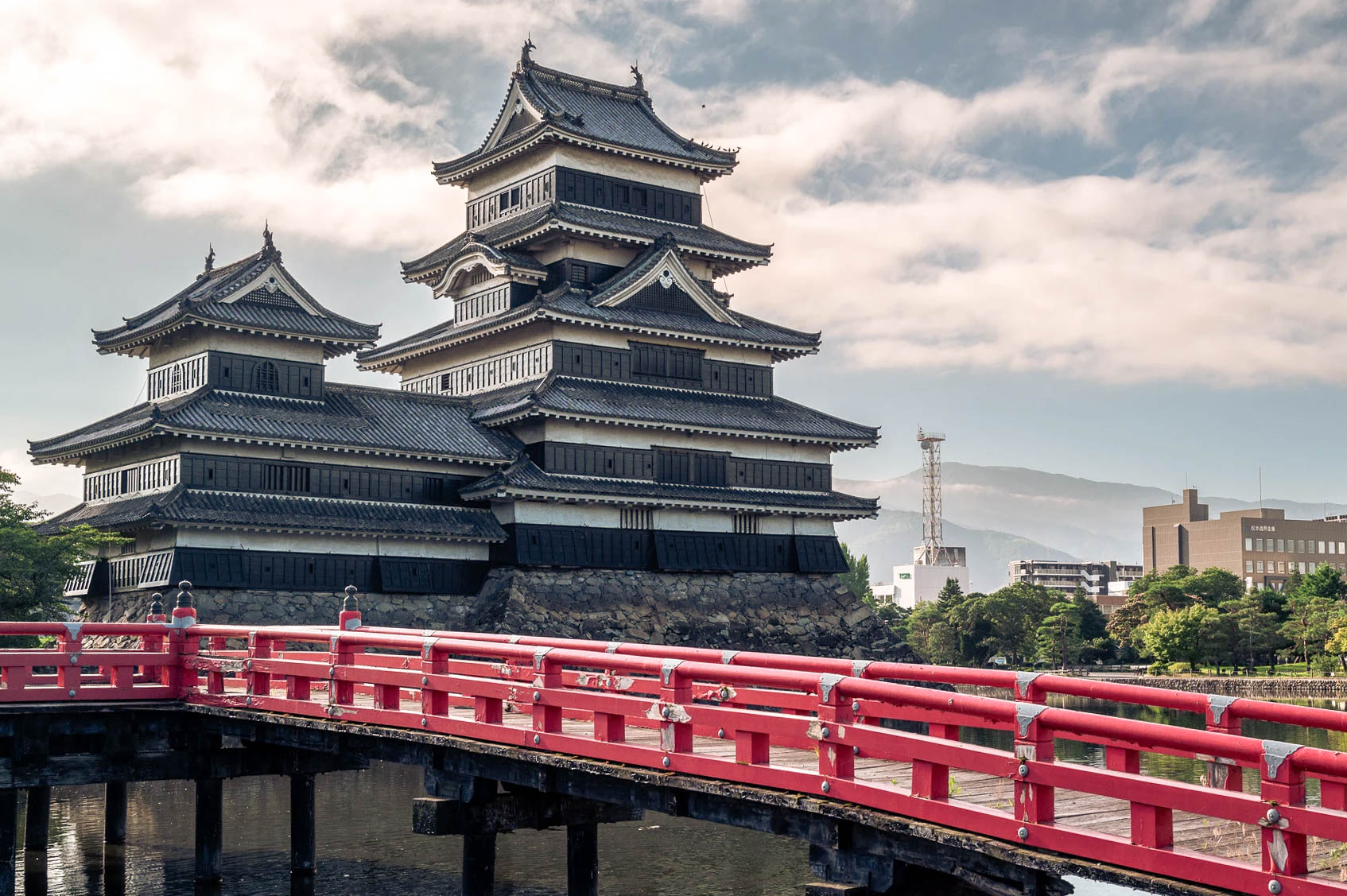
Though often overshadowed by castles in Nagoya or Osaka, Matsumoto Castle is far more significant historically. It is one of only five castles designated as a National Treasure, and crucially, it is an original structure, not a modern reconstruction.

Built in the late 16th century, Matsumoto Castle is one of the last two remaining original five-story castles in Japan. Its black exterior, which earned it the nickname “Crow Castle,” is striking against the backdrop of the Japanese Alps. The castle is beautiful year-round, but especially atmospheric during cherry blossom season in spring and amid autumn foliage.
Inside, the keep reveals its defensive ingenuity. Although the exterior appears to have five stories, there are actually six internal floors, which is an intentional deception designed to hide more troops and confuse attackers. The steep staircases are uncomfortably narrow and steep by modern standards, a reminder that the castle was built for people of much smaller stature centuries ago. I’m reasonably fit, so I managed fine, but it’s worth keeping in mind if mobility is a concern.
The weapons collection across the upper floors is extensive — swords, spears, arquebuses from the Edo period. What makes it quietly strange is that none of it was ever used here. Matsumoto City was never really attacked, so the castle was simply never the site of a battle. The castle sat ready, fully armed, and the conflict never came. All that preparation, all that ingenuity in the design, and the keep functioned throughout its history as a symbol rather than a fortress. There’s something almost melancholy about that, standing inside it.
The final ascent rewards you with views over Matsumoto and beyond with city and mountain wilderness in the same frame.
Explore the Historic Streets
Two streets near the castle invite wandering:
Nawate-dori, also known as “Frog Street,” marked by a statue of two warrior frogs. The street is lined with quirky shops, cafés, and street food vendors. It’s playful and charming without feeling overly touristy.
Nakamachi-dori, just across the river, is lined with preserved kura (traditional storehouses) that have been converted into boutiques, cafés, and craft shops. The street retains a lived-in, cultured atmosphere—less performative than many preserved townscapes, more integrated into daily life.
Both streets reflect Matsumoto’s character: historic but not frozen in time, thoughtful without being precious.
Where to Stay in Matsumoto
Stay near Matsumoto Station for convenience. There’s a surprisingly wide range of business hotels, including some with small onsen—comfortable, practical, and well-suited for an early departure the next day.
My recommendations are Onyado Nono Matsumoto (official website), located near the station. It is a chain of modern Japanese-style premium hotels, operated by Dormy Inn. The hotel offers a “shoes-off” experience, combining traditional Japanese aesthetics with contemporary comfort. It’s slightly more expensive than other business hotels in the area, but it offers good value for what you get:
- Onsen facilities: Not as luxurious as a proper ryokan, but a nice bonus after a day of walking.
- Breakfast: Typical Japanese fare—rice, grilled fish, egg, side dishes, miso soup. Well-prepared and satisfying.
- Convenience: Close to the station, making it easy to catch early trains to Kamikochi or Narai-juku.
Other solid options in the area include Richmond Hotel and Tabino, both offering similar standards at slightly lower prices.
You’ll be staying in Matsumoto for three consecutive nights (Nights 2, 3 and 4 of this itinerary), which eliminates the need to pack and unpack repeatedly.
Dinner in Matsumoto
Matsumoto’s food scene rewards a bit of wandering more than it rewards advance planning. The specialties worth knowing: soba (the region produces excellent buckwheat), basashi (horse sashimi, a local staple that surprises people), and sake from the surrounding valley breweries.
For Night 2, I ate at 卯屋 (Uyoya), an izakaya a short walk from the station with solid seasonal dishes, good sake list, the kind of place where you can order slowly and stay a while. For Night 3, 稲匠 (Inasho) is another option in a similar register. Neither is destination dining, but both are genuinely good and representative of what Matsumoto does well. The area around Nawate-dori and Nakamachi-dori has plenty of options if you’d rather explore and pick based on atmosphere.
Day 3: Kamikochi Day Trip from Matsumoto
A surreal alpine valley
Kamikochi, often translated as “where the gods descended,” is a high-altitude valley in the Japanese Alps. A crystal-clear river winds through valleys and forests, framed by sharp, snow-capped peaks. The landscape feels almost unreal in its clarity—the kind of place where you stop frequently just to take in the view.
I visited in late summer, when the valley was lush and green, the river impossibly transparent, and the peaks still capped with snow. The area is ideal for gentle walks, though longer alpine routes also begin here. Autumn is especially beautiful for colorful foliage, while spring and early summer offer vibrant greenery and pleasant temperatures. The mountains keep the area cooler than the lowlands, making Kamikochi a popular escape from urban heat.
Note: Kamikochi is open from mid-April to mid-November. No private cars are allowed, so buses are the only option for access.
Getting there
Via Public Transport (Recommended):
Matsumoto → Shin-Shimashima Station by train (30 minutes)
Shin-Shimashima Station → Kamikochi by bus (60 minutes)
Via Rental Car:
Drive from Matsumoto to Sawando Bus Terminal (50 minutes), park your car, and take the bus into Kamikochi from there (private cars are not permitted beyond this point).
I don’t recommend the rental car option for this day trip. Since you’ll need to take a bus regardless, renting a car doesn’t save much time and adds unnecessary complexity.
Best sights in Kamikochi
This isn’t a technical hike—it’s more of a country walk along well-maintained, flat paths. The scenery is the main attraction.
Taisho Pond
The bus makes its first stop at Taisho Pond, a serene body of water created by a volcanic eruption in 1915. The submerged trees rising from the water give it an eerie, haunting beauty. I recommend getting off here and exploring deeper into the valley on foot rather than staying on the bus all the way to the main terminus.
Walk to Kappa Bridge
From Taisho Pond, walk to Kappa Bridge (河童橋), the iconic suspension bridge that serves as Kamikochi’s symbolic heart. The walk takes about 1 hour at a steady pace (the recommended time is around 80 minutes if you’re moving more leisurely). The path follows the Azusa River, which is stunningly clear—you can see every stone on the riverbed. The surrounding peaks rise dramatically on both sides, creating a valley that feels protected and almost sacred.
Pro Tip: Get off the bus at Taisho Pond, walk to Kappa Bridge, then take the bus back from Kappa Bridge. This avoids backtracking and lets you experience the valley in one direction while still using efficient transport.
Optional: Walk Deeper Into the Valley
If you have extra time and energy, continue walking from Kappa Bridge toward Myojin Pond (about 1 hour further). The crowds thin out significantly beyond Kappa Bridge, and the landscape becomes even more serene.
Lunch in Kamikochi
There are several cafés and restaurants near Kappa Bridge offering simple meals—curry rice, ramen, sandwiches. The food is functional rather than exceptional, but the setting more than compensates. Eating lunch with a view of the river and peaks is part of the experience.
Day 4: Narai-juku Day Trip from Matsumoto
Time travel back to the Edo period
Narai-juku was the 34th of the 69 post towns along the Nakasendō, the historic route connecting Edo (Tokyo) and Kyoto. During the Edo period, travelers walked this route, stopping at post towns like Narai for rest, food, and lodging. Today, Narai remains one of the best-preserved examples of an Edo-period townscape in Japan.
Getting There:
Matsumoto → Narai-juku by train (55 minutes)
Alternatively, you could rent a car from Matsumoto and drive to Narai-juku. However, I don’t recommend this option since it doesn’t save much time, and the Narai-juku site is very close to the train station, making public transport the more practical choice.
What to do in Narai-juku
Walk the Nakasendō
Narai’s main street follows the route of the historic Nakasendō, and unlike many preserved towns, it remains very much alive. People still live and work here, maintaining wooden houses and shopfronts that have stood for centuries.
Walking its length feels less like entering a museum and more like stepping briefly back in time. Latticed windows, narrow eaves, tiled roofs, and the quiet routines of daily life unfold along the valley. This is not a recreated village—it is a real town, shaped by continuity rather than restoration.
Narai is especially beautiful in spring and autumn, when flowers bloom and the surrounding hillsides turn with the seasons. It never feels crowded, but there’s a quiet pride in how the town is kept—not as a performance for visitors, but as part of everyday life.
Browse Shops and Cafés
The shops lining the street are mostly small, the kind run by older ladies who’ve been doing this for decades, selling lacquerware, local sweets, handmade goods. The buildings themselves are essentially the originals: low ceilings, dark timber, slightly cramped in the way that reminds you these spaces were built for a different era and a different pace of life. I didn’t buy anything in particular, but that wasn’t really the point. The browsing is an excuse to step inside, look around, and notice how little has changed.
Lunch in a Restored Townhouse
Several places along the main street serve simple meals, like soba, ramen, set lunches, in beautifully preserved timber buildings. I didn’t keep a note of where I ate specifically, so I won’t point you to one place over another. What I’d say is: stop somewhere that looks lived-in, order whatever’s on the daily menu, and take your time. The interior is part of the meal. Low ceilings, dark timber, shoji screens, this is the kind of lunch where the setting does as much work as the food.
After exploring Narai-juku, return to Matsumoto and stay at the same hotel as the previous night.
Day 5: Return to Tokyo/ head towards Nagoya
Use the morning to revisit any Matsumoto sights you missed, explore at a leisurely pace, or simply relax over coffee before departing. If you didn’t have time to fully explore Nawate-dori or Nakamachi-dori on Day 2, this is your chance to return.
From Matsumoto, you have two options:
Return to Tokyo:
Matsumoto → Tokyo by limited express + Shinkansen (approximately 2.5 hours)
Continue to Nagoya:
Matsumoto → Nagoya by limited express (approximately 2 hours)
If you’re heading to Kyoto or Osaka next, continuing to Nagoya rather than backtracking to Tokyo saves several hours and keeps the journey moving in the right direction. Matsumoto acts as an excellent bridging point between Tokyo and Nagoya, making it easy to continue your journey without backtracking.
Practical Notes
When to visit
This Nagano and Matsumoto itinerary is designed for spring, summer, and autumn. In winter—especially from January onwards—the path toward Togakushi Shrine is often closed due to heavy snowfall. Additionally, Kamikochi is only open from April to November. Therefore, the itinerary would look quite different in winter, which I cover in another post.
- Spring (March–May): Potential for cherry blossoms near Matsumoto Castle in early April. The castle surrounded by pink blooms is one of the most photogenic sights in the region. Temperatures are mild, though evenings can still be cool.
- Summer (June–September): Nagano and the surrounding mountains remain cooler than urban areas, making this an ideal season for escaping the heat. Kamikochi is especially pleasant, with lush greenery and comfortable walking temperatures. This is also peak hiking season for those interested in longer alpine routes.
- Autumn (October–November): Autumn foliage in Kamikochi and Narai-juku is spectacular. Kamikochi typically peaks in late September to mid-October, while Narai-juku and the lower elevations turn later in the season. This is widely considered the best season for this itinerary due to comfortable weather and vibrant landscapes.
Budgeting tips
This Nagano and Matsumoto itinerary is quite budget-friendly because accommodations are significantly cheaper than what you would expect in Tokyo. Business hotels in both Nagano and Matsumoto offer excellent value—spacious rooms, good facilities, and convenient locations at prices comparable to 2-star Tokyo hotels.
Approximate costs:
- Accommodation: ¥10,000 per night for business hotels
- Meals: ¥1,400–2,000 for casual meals; ¥3,000–6,000 for nicer dinners
- Transport: JR Pass covers most trains; day trip buses to Kamikochi and Togakushi are ¥2,000–3,000 return
- Admission: Matsumoto Castle ¥700; Zenkoji inner chamber ¥500
Overall, this itinerary is affordable while still offering high-quality experiences. You’re not sacrificing comfort or authenticity to save money—the region simply offers better value than major tourist hubs.
Final Thoughts
What I keep coming back to is the view from Kamikochi. Standing at Kappa Bridge with the Azusa River running clear beneath it and the Alps rising sharply on both sides — that’s the image that stuck. I’d go back for a proper multi-day hike through those mountains without hesitation.
But it’s the smaller things that round out a trip like this. The total darkness of the Zenkoji passage, genuinely disorienting in a way I didn’t expect. The cold soba at Sobanomi, eaten quietly in the forest after the Togakushi walk. The five National Treasure castles are now a project — Matsumoto is done, four to go.
Nagano and Matsumoto won’t make every Japan itinerary. They’re not flashy, and they don’t need to be. They reward the kind of traveller who finds value in a castle that survived intact, a post town where people still actually live, and an alpine valley cool enough in August that you need a light layer by mid-afternoon.
If that sounds like your version of a good trip, this itinerary will deliver.
Planning a visit to Japan beyond the obvious? My Nagano and Matsumoto winter itinerary covers the same region in colder months, and Japan beyond the Golden Route maps out the best side trips from Tokyo if you’re building a longer trip.
Leave a Reply